Accreditation – The Bridge Between Quality EMS Training In Kenya And International Labor Export
In an emergency, there is no time to question someone’s training. It either shows, or it doesn’t. That is why accreditation matters.
In Kenya’s Emergency Medical Services (EMS) space, where seconds carry weight and decisions have real consequences, training cannot be left to chance. It must be structured, regulated, and held to a standard that protects both the patient and the responder. However, this has not always been the reality.
Yes, there was a time when training had no standard. When KRCTI was founded in 2010, the EMS training landscape was largely fragmented. Many first responders relied on short courses, informal experience, or on-the-job learning without clear certification pathways or professional recognition. There were no standardized national curricula for Emergency Medical Technicians or Health Care Assistants, and employers had no consistent way to distinguish between qualified and unqualified personnel.
At the time, the priority was simple: to equip as many people as possible with lifesaving skills. Training focused on basic first aid and fire safety, practical knowledge that could be immediately applied in everyday emergencies. While this approach was necessary, it was not sufficient to build a sustainable and reliable system. Without accreditation, training remains isolated. It cannot be standardized, cannot scale effectively, and cannot consistently guarantee quality.
From Training to Trust:
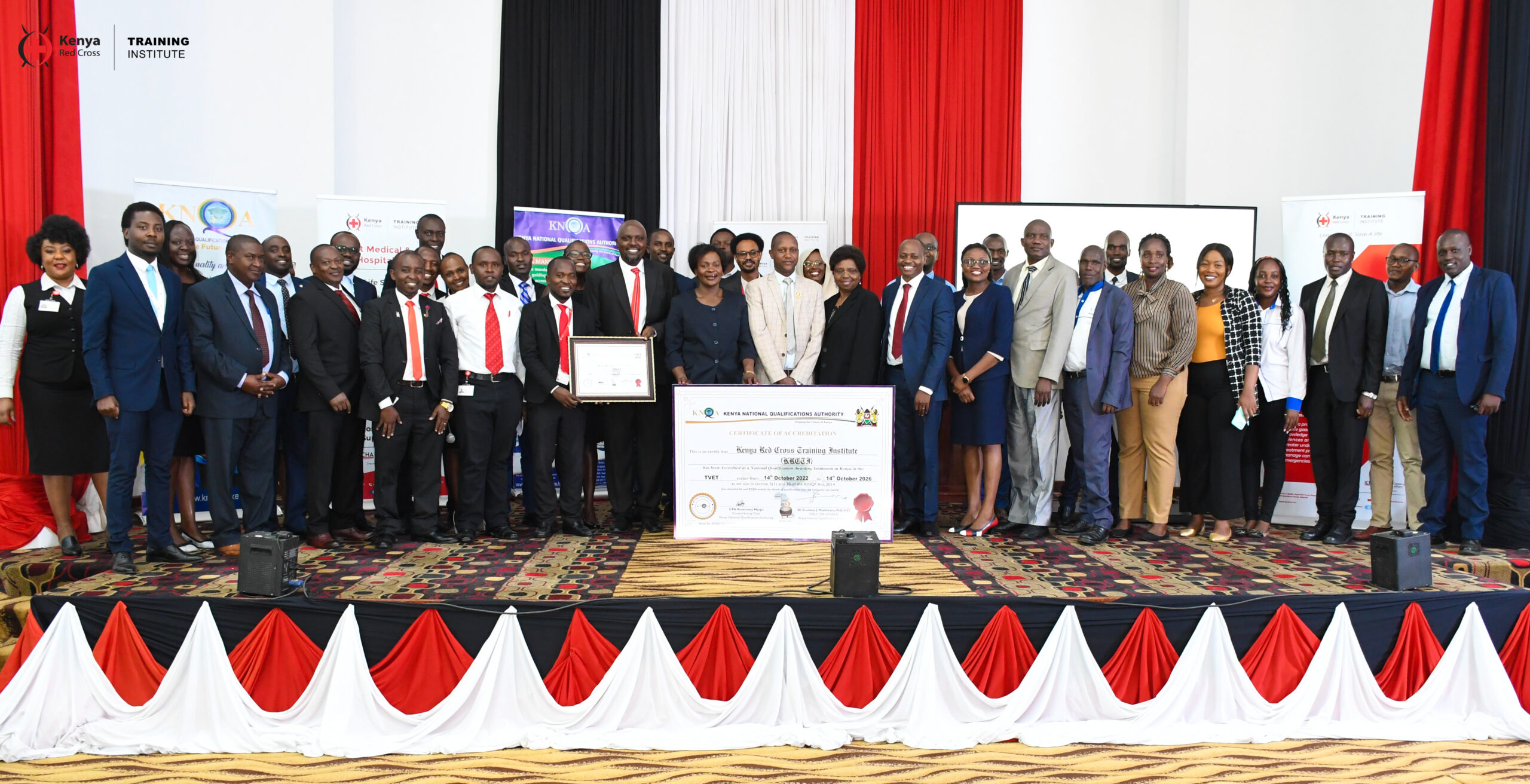
As the sector evolved, it became clear that access to training alone was not enough. What was needed was trust in that training, and trust is built through accreditation. Today, KRCTI operates as a fully registered Technical and Vocational Education and Training (TVET) institution under the Technical and Vocational Education and Training Authority (TVETA). This means that its programs, trainers, and facilities meet nationally defined standards for vocational education. Beyond registration, accreditation by the Kenya National Qualifications Authority (KNQA) as a Qualification Awarding Institution (QAI) ensures that training is aligned with the Kenya National Qualifications Framework (KNQF). This alignment means that qualifications are structured, measurable, and nationally recognized. For students, this translates into qualifications that carry real value. For employers, it provides confidence in the competence of the people they hire. For the wider system, it creates consistency where there was once uncertainty.
Why Global Standards Matter Too
Healthcare does not exist in isolation, and neither should training. Aligning international standards strengthens the quality and relevance of local training programs. Through accreditation with organizations such as the American Heart Association (AHA), EMS training incorporates globally recognized protocols in Basic Life Support (BLS) and Advanced Cardiovascular Life Support (ACLS). Additional recognition by bodies such as the Directorate of Occupational Safety and Health Services (DOSHS) and the National Industrial Training Authority (NITA) ensures that training also meets the standards for workplace safety and professional development. These accreditations are not symbolic. They ensure that training reflects both local realities and global best practices, preparing responders who are capable, confident, and effective under pressure.
Recognizing Experience: A System That Includes, Not Excludes

A significant milestone in Kenya’s training landscape has been the introduction of Recognition of Prior Learning (RPL). For many years, individuals gained extensive experience as emergency response ambulance drivers, community health volunteers, and first responders who understood the work deeply but lacked formal certification. RPL addresses this gap by creating a pathway for such individuals to have their skills formally assessed and recognized. As a designated RPL Centre, KRCTI plays a role in ensuring that experience is not overlooked but validated and built within a structured framework. This represents a shift toward a more inclusive system, one that recognizes competence regardless of how it was acquired.
Looking Ahead: Building Systems That Last
Accreditation is not a one-time achievement; it is an ongoing commitment to quality, relevance, and continuous improvement. Looking ahead, the focus remains on strengthening research capacity to generate data that can inform policy and improve prehospital care practices in Kenya. There is also a continued effort to expand training delivery using simulation, technology, and e-learning, ensuring that training remains responsive to evolving needs. In addition, building strategic partnerships will be key in supporting workforce development, creating clinical placement opportunities, and strengthening employment pathways for graduates. These efforts align with the broader vision outlined in Kenya’s Emergency Medical Care Policy (2020–2030), which emphasizes coordinated, high-quality emergency care systems.
Why This Matters Now More Than Ever
Accreditation is often viewed as a technical requirement, but in reality, it serves a much deeper purpose. It protects the patient by ensuring that responders are trained to a defined standard. It protects the practitioner by creating clear pathways for professional growth and recognition. It also protects the system by ensuring accountability, consistency, and trust. In emergency care, there is no room for uncertainty. Training must be credible, skills must be reliable, and systems must function effectively.
Accreditation is what makes that possible. A Standard Worth Building On The journey from informal training to structured, accredited education reflects a broader transformation within Kenya’s EMS sector. It is a shift toward quality, accountability, and preparedness. Ultimately, it is a shift toward saving more lives.
The conversation around accreditation is increasingly intersecting with broader global frameworks such as the One Health approach, which recognizes the interconnectedness of human, animal, and environmental health. In this context, strengthening the healthcare workforce is not just a national priority but a global one. Well-trained emergency responders and healthcare assistants are critical not only in clinical settings but also in managing public health risks, disease outbreaks, and environmental health challenges. Accreditation ensures that training institutions are producing professionals who can operate effectively within these interconnected systems, contributing to more resilient health structures both locally and internationally.
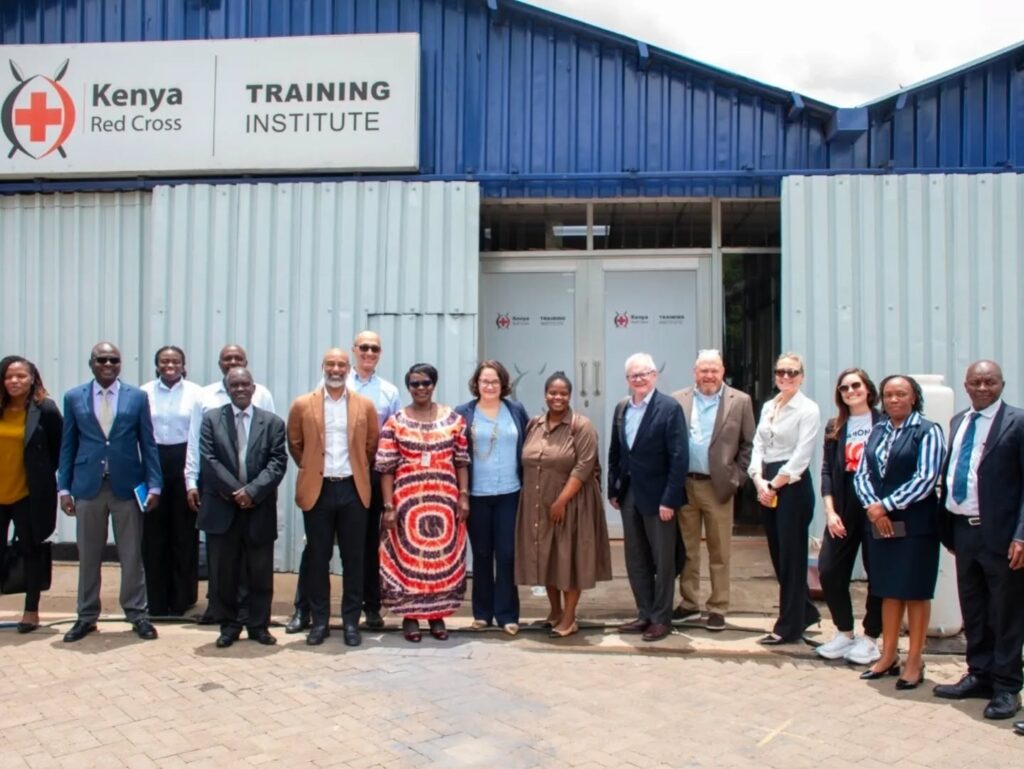
Additionally, accreditation plays a strategic role in positioning healthcare training within the global labour market. As countries like Canada continue to experience workforce shortages, there is a growing demand for well-trained healthcare professionals from countries like Kenya. Recent engagements, including a Canadian delegation visit coordinated through the Ministry of Labour and Social Protection, reflect ongoing efforts to align training with international standards and create structured employment pathways for graduates. Through such partnerships, KRCTI is not only strengthening the quality of training but also enabling graduates to transition into global health systems with confidence and competence. This positions accredited training as a bridge between local capacity building and international opportunity, ensuring that graduates are prepared to contribute meaningfully wherever they serve.
-Written by Abigail Mueni, Communications Assistant, KRCTI-
Tag:Accreditation in Kenya, AHA certification Kenya, emergency medical services Kenya, EMS quality standards Kenya, EMS training Kenya, global labour market healthcare, healthcare assistant training Kenya, healthcare workforce Kenya, KNQA qualifications, KRCTI accreditation, labour export Kenya, paramedic training Kenya, recognition of prior learning Kenya, TVETA accreditation Kenya